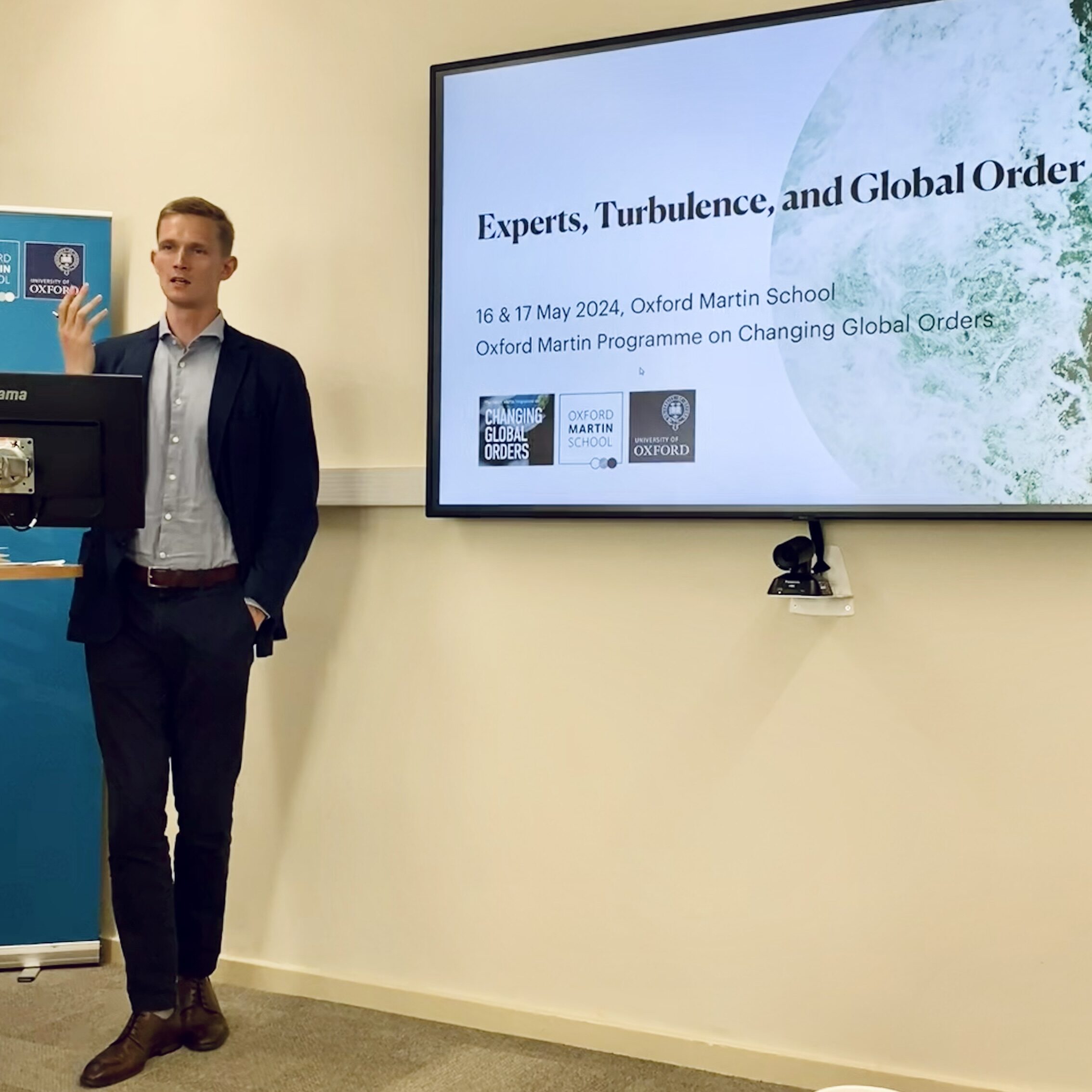
My work primarily examines the nineteenth-century international political imagination from the point of view of experts, technicians, and capitalists. My first book – The Technocratic International, Oxford University Press (2026) – combines an intellectual history of technocratic international thought with case studies of nineteenth-century international experiments with expertise: the Suez canal, international telegraphs, and the first World’s Fairs. Listen to this interview with the New Books Network to find out more. I am also the editor of Experts In A Turbulent World (Oxford University Press, July 2026) which brings together historians and IR scholars working on expertise.
In 2027 I will be leading a new project, funded by an ERC Starting Grant, titled “Regulatory Communities and the Making of Global Order” (REGCOM). International organisations daily work on something seemingly banal but unmissable: technical regulations — the backstage rules of the “rules-based international order”. But who engages in transnational regulation, when, and why? How do regulations relate to inequalities in global order? REGCOM steps in with a comprehensive historical-sociological study of transnational “regulatory communities”. Between 1850 and 1950, predating standard accounts of regulation, transnational regulations were made and contested by networks of public and private actors; by non-professionalised labour; and inspired by colonial administrative practices. Based on multi-archival research and social network analysis, REGCOM will generate new insights on three policy areas: shipping, telecommunications, and agriculture.